
Cumhur Görgün explores the historical context in Donizetti’s opera and complex motivations in Henry VIII’s relationships with Anne Boleyn and Jane Seymour.
BY CUMHUR GÖRGÜN
ACADEMY OF VOCAL ARTS
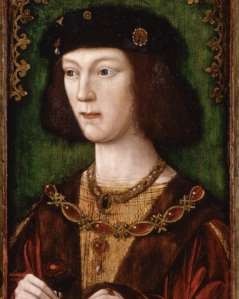
In Donizetti’s Anna Bolena, I step into the shoes of a young Henry, caught up in an intricate dance of love, power, and destiny. My debut as Henry VIII has been a captivating journey into the mind and heart of a complicated monarch. In my portrayal, I wanted to challenge the stereotyped image of Henry as a villain. Rather, my goal was to present him as a human being with the full complexity of motives and emotions we all share.In the tapestry of the plot, Henry’s decision to separate from Anne Boleyn is driven not by anger, or dislike, or even lack of interest, but by the burden of royal duty. Wearing the crown, by law and tradition, Henry has a direct relationship with God. He navigates divine complexities in his decisions. The divine right he enjoys can only pass on to his male heir. The need for a son to rule the kingdom after him is paramount. Without an heir, he believes, court rivalries might throw his kingdom into chaos. His legacy would be lost.
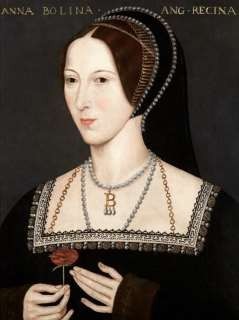 This urgent need—both political and psychological—left only one option. He had to have an heir. Anne Boleyn was his choice to give him one. He truly loved the coy lady. She refused to become his mistress, as her sister Mary had. Yet Henry desired her. To consummate their relationship and produce an heir, he first had to annul his existing marriage with Catherine of Aragon, his wife of two decades.
Catherine of Aragon did not do pregnancies well. She married Henry in 1509. A daughter miscarried at six months in 1510. A son died after a few weeks in 1511. Another son was stillborn in 1513. Yet another son was stillborn in 1514. Her only offspring to survive, born in 1516, was to become Queen Mary I of England. Her last pregnancy ended with a stillborn
daughter in 1518. After that, nothing. By the time Henry became attracted to Anne Boleyn in the early 1530s, Catherine was already 45 years old. Clearly no male heir would come from her.
Was it a deep love for Anne Boleyn that caused Henry to seek an annulment of his first marriage? Or was it a deep sense of duty to preserve the integrity of his kingdom? Henry’s eagerness to wed Anne adds an emotional layer to the story, so surely love was in the mix. But she, too failed to produce a male heir, and moreover, became controlling, and unpopular in court. Lo and behold, one of her maids-of-honor, Jane Seymour, engaged Henry’s affections. He saw no way forward with Anne Boleyn.
I’m glad I only play the role of Henry VIII, and do not have to live his life! I can feel his angst and despair as he navigates the intricacies of his rule, the relationship of his kingdom to the Catholic Church, and personal sacrifices made for the sake of royal continuity. My job is to express his full range of emotion as Donizetti captured them in his arias. Of course this is a fictional Henry conceived by Donzetti, and his beautiful arias should not be taken as historical fact. The opera highlights the weight of expectation placed on Henry as a ruler as he plots against Anne Boleyn.
Anne Boleyn was a woman of intelligence, charm, and influence at the Tudor court. Prior to her marriage to Henry VIII, she spent time in the French court, serving as a lady-in-waiting to Queen Claude of France, where she gained exposure to French culture, fashion, and sophistication. Her experience in France significantly contributed to her refined manner and her appreciation of culture. Upon her return to England and her subsequent marriage to Henry, Anne Boleyn’s intellect, wit, and charismatic nature swiftly captured the attention of the English court. She became a powerful and influential figure in Henry’s circle, wielding influence over the king. With her charm and intelligence, Anne Boleyn maintained diplomatic relations with the French court by maintaining her earlier connections and building new relationships in fluent French. Her ability to communicate and negotiate with French diplomats and ambassadors played a role in shaping England’s foreign policy.
Anne faced challenges and opposition during her time as Henry VIII’s second wife. Her marriage to Henry was controversial and led to a significant upheaval in England’s religious and political landscape. Her opposition saw Anne Boleyn as responsible for Henry’s decision to break away from the Roman Catholic Church, the controversial and disruptive event that led to the establishment of the Church of England and the English Reformation.
Henry VIII’s motivation for this break was multifaceted. The failure of the Catholic Church to grant an annulment of his marriage to Catherine of Aragon spurred him to act. However, in addition to having an eye on Anne Boleyn, he was attracted to other treasure, as well. After establishing the Anglican Church, Henry confiscated vast amounts of wealth, land, and property previously under the control of the Catholic Church in England. This significantly enriched the monarchy and the royal treasury.
Anne Boleyn, however, viewed the Catholic Church resources differently. She advocated using wealth and property seized from the Church to promote education and support charitable causes. Anne’s influence was notable not just in courtly matters but also in political decisions and international affairs. Her support and influence often impacted the king’s decisions, and she actively participated in matters of state, though not to the extent of a reigning queen. Her involvement in politics, her strong will, and her opinions created both supporters and adversaries, contributing to the complex and sometimes contentious atmosphere of Henry VIII’s court.
Anne Boleyn’s ambitions to redirect Catholic Church resources toward the betterment of society clashed with the traditional perspectives and priorities of Henry’s privy council and other advisors. They had their own interests at heart, and preferred to use the wealth and land for the consolidation of power and economic gain. This conflict of interests, among other factors, contributed to the discord and rivalry Anne Boleyn faced within Henry’s court, further exacerbating her already precarious position as queen. Ultimately, Anne’s influence and aspirations were overshadowed by the broader political and religious changes resulting from Henry’s decision to break with Rome, leading to her downfall and eventual execution on charges of adultery, treason, and incest—a terrible end for a woman of such intelligence and such an advanced social conscience.
After Anne’s execution Henry married Jane Seymour. Their love story, as depicted in historical records, portrays Jane Seymour as a more gentle and demure figure compared to Henry’s previous wives. Henry was deeply in love with Jane. Her quiet, calm nature seemed to provide a sense of stability for the king, especially after the turbulent and controversial reign of Anne Boleyn. Their relationship was significant not only for their personal attachment but also for the birth of their son, Edward, who was the long-awaited male heir Henry desired to secure the Tudor dynasty’s future.
Henry’s true and deep affection for Jane Seymour emerges as a heartbreaking thread in the story, challenging preconceptions. He had a genuine connection to her, and at the same time, also had faith in divine guidance for his decisions. A king by divine right, he believed his acts ultimately were guided by God, even if he felt inner turmoil while making the life-and-death decisions his kingly circumstances forced upon him
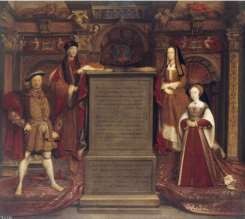
While preparing for this role, I immersed myself in the historical context of Henry VIII, drawing inspiration from documentaries, books, films, and series. My aim was to uncover every detail of his life. I studied pictures to capture his gestures, his writings to
understand his mind, and the clothes he wore to see how he adorned himself. In my research I found Henry had a musical side to his personality. A creative and talented composer of songs in French and English, he so loved music he even had a his personal group of musicians serenade him during moments of intimacy.
I also found Henry VIII had a huge interest in Turkish rugs! From inventories we know he owned several hundred, and some appear in portraits by Hans Holbein. In this famous painting (a copy of a Holbein mural destroyed by fire in 1698) Henry VIII and his wife Jane Seymour stand on Turkish rugs with in the foreground, with representations of his father Henry VII and Elizabeth of York in the background.
Rugs are not the only connection of this opera to Turkey. Leyla Gencer, a notable Turkish bel canto soprano, known for her remarkable voice, made her La Scala debut in 1957, and in 1962 performed the role of Anne Boleyn in in Gaetano Donizetti’s masterpiece at the Royal Opera House, Covent Garden. The success and acclaim of Leyla Gencer’s performances in “Anna Bolena” played a pivotal role in the renaissance of this opera, leading to more frequent performances and a reassessment of its musical and dramatic value within the operatic repertoire.
Singing the iconic role of Henry VIII at the Academy of Vocal Arts this year was a tremendous growth experience for me. To portray a historical figure like Henry VIII is a unique challenge, but he’s a character with rich emotions and changing perspectives, making the journey all the more rewarding!
